
Did you know that the way you dry herbs can make a big difference in how well they preserve their essential oils? And did you know also that the quality of commercial dried herbs is still much lower than that of fresh herbs? Studies have shown that herbs lose up to 50% of their essential oils, which are basically the ones we would like to preserve.
Today, we are going to talk about the various methods of drying herbs at home. Drying herbs may be a necessary step in preserving them, but it can also significantly reduce their essential oil content – even under gentle conditions like air-drying at room temperature. Studies have shown that drying can cause a loss of about 36–45% in basil, 23–33% in marjoram, and 6–17% in oregano.
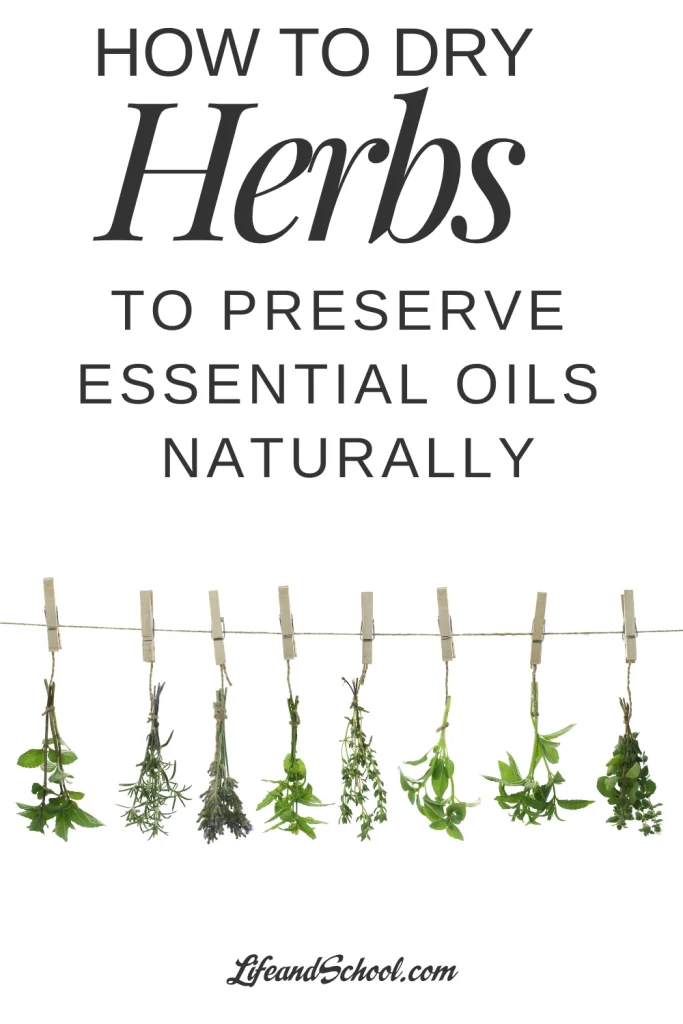
So, while drying helps extend shelf life, it’s worth keeping in mind that some of the plant’s most valuable compounds might be lost in the process. Therefore, I like to dry my herbs by myself and best even to keep them always fresh, when possible.
Why Drying Matters When Preserving Herbs for Their Essential Oils
That’s because the essential oils of the herbs are actually stored in delicate structures on the plant’s surface called trichomes – little hair-like glands found mostly on the outer layer of leaves and flowers.
These trichomes can be easily damaged if the plant is dried too harshly or with too much heat. Once they’re broken, much of the essential oil is lost before it even makes it into your tea, tincture, or poultices.

That’s why choosing the right drying method is so important. Gentle air-drying in a shaded, well-ventilated area is often best for preserving those fragile oil glands. It may take a little more time, but trust me – your herbs will be more fragrant, potent, and effective because of it.
So,
How to Dry Herbs Naturally?
There are two methods to dry herbs naturally – sun drying and shade drying.
Sun Drying
Sun drying is one of the oldest and most traditional ways to preserve herbs and spices. In some regions, people still widely use sun-drying for herbs today, especially in tropical and subtropical regions. One big advantage? It’s incredibly cost-effective. All you need are fresh herbs, some drying racks, and consistent sunshine. It’s a method that’s been relied on for centuries.
How Long Does It Take for Herbs to Dry Naturally in the Sun?
Depending on the sunshine – it takes 2-3 days.
But does sun drying still hold up today?
Recent research suggests it might work well for certain herbs. For example, a study by Hazrati found that sun drying was a viable method for preserving the aerial parts of Stachys lavandulifolia, alongside other techniques like shade and oven drying.
However, sun drying isn’t ideal for all herbs. It can actually reduce the quality of some plants. It can damage color, aroma, and even nutritional content. Plus, when you sun-dry your herbs you can expose them to dust, dirt, insects, and that’s not what we want.
Also, if the sun is to strong, the herbs are going to be brown within a day. I’ve lost a bunch of Lemon Balm last month for hanging it in the sun. Big mistake, within 2 days, the herb was burned.
One case study found that sun-dried samples produced less essential oil than shade-dried ones. Sun exposure also caused visible shrinkage and damage to the glandular trichomes – the tiny structures that store essential oils. It caused to a loss of aroma and reduced mineral content. This suggests that too much sunlight can rupture those oil-containing cells, allowing the precious oils to evaporate.
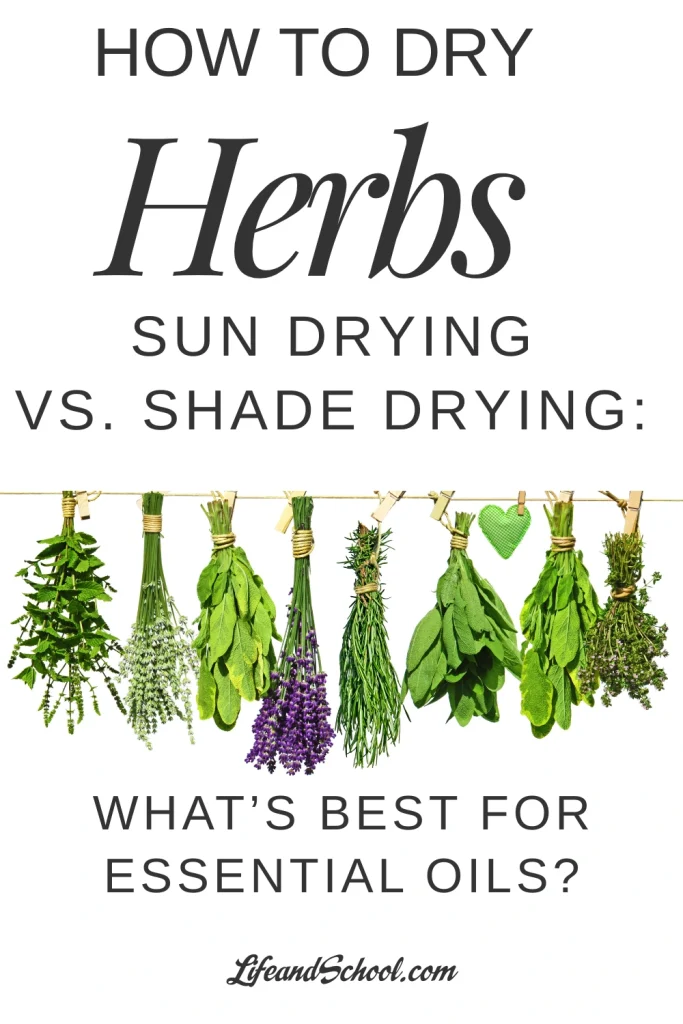
So, while solar drying remains the simplest option, it’s not one-size-fits-all. It’s important to understand the specific needs of each plant. Long exposure to sun may result in the breakdown or oxidation of important compounds, so choosing the right method for each herb is key.
Sun drying is not a good option for most herbs. I advise you to avoid it, especially for basil, oregano, lemon balm, and mint.
Shade Drying
Shade drying is a traditional method that, like sun drying, relies on solar energy—but without exposing the herbs to direct sunlight. Instead, place the herbs in a shaded, well-ventilated area where warm air slowly dries them. This technique is especially beneficial for light-sensitive plants and helps preserve essential oils by reducing the risk of oxidation and chemical alteration.
One downside? Shade drying takes longer than sun drying. But for many herbs, the benefits are worth the wait.
How Long Does It Take for Herbs to Dry Naturally in the Shade?
Depending on the sunshine, you need hot, dry, breezy weather – it takes 1-2 weeks.
Despite the slower process, shade drying remains a great choice to preserve your herbs. It’s low-cost, chemical-free, and delivers a high-quality final product – perfect for anyone wanting to preserve the natural goodness of their herbs.

Shade Drying: A Gentle Method for Preserving Essential Oils in Herbs
Several studies have shown that shade drying can preserve more essential oils than other methods. For example, herbs like lemon balm, mint, and sage retained more of their essential oil content when dried in the shade compared to conventional hot-air (convective) drying. In one study mint dried in the shade at around 30 °C produced one of the highest essential oil yields – comparable to samples oven-dried at 50 °C. These samples also had higher levels of valuable bioactive compounds like polyphenols, flavonoids, and tannins. The shade-dried mint achieved an essential oil yield of 1.73%, outperforming both sun-dried (1.35%) and oven-dried (1.1%) samples. Not only did shade drying result in better oil yield, but it also enhanced the oil’s antioxidant properties.
One reason shade drying works so well is that it protects the plant’s glandular trichomes—the tiny structures that store essential oils. Without harsh heat or direct sunlight, these trichomes stay intact, reducing evaporation and helping retain more oil until the extraction process.
That said, the long drying time can sometimes lead to trichomes bursting – especially in humid or poorly ventilated spaces. Therefore, always make sure that the space you choose is well-ventilated.
How to Dry Herbs by Hanging?
1. Hang in Bunches
I usually choose to shade-dry my herbs by tying them into small bunches with natural hemp twine. I hang them on my balcony, where they get enough air circulation.
2. Dry Flat on Paper or Cloth
Another method is to spread them on kitchen paper sheet or cotton cloth on a drying rack inside my home.
Place them in a dry, shaded, and well-ventilated area. Turn them occasionally to ensure even drying. This method also takes about 1–2 weeks.
However, this takes up more space, and the air circulation isn’t as good as on the balcony, so the drying process takes longer.
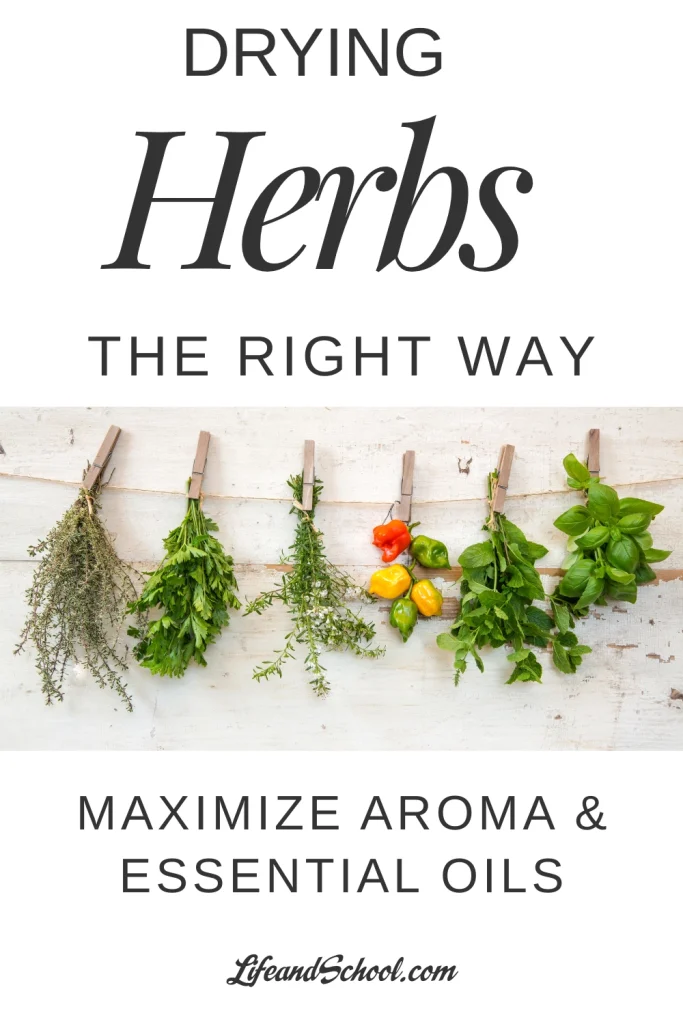
When I don’t have much time, I go for the next best option — drying my fresh herbs in the oven. Less natural, but much faster.
How to Dry Herbs in the Oven?
The studies I’ve shared above found out that shade drying preserves the highest amount of essential oil. However, also an oven drying at 40 °C – 60 °C (about 104 °F – 140 °F) is a viable alternative. Depending on the herb you are drying it can take up to 2 hours.
How to Dry Herbs in the Microwave?
Microwave drying is another method often used in the herbal and food production industries, right alongside traditional hot-air drying. What makes this technique appealing is its speed – it evaporates moisture from herbs quickly, reducing overall drying time significantly. This rapid process helps maintain the shape of the herbs, resulting in less shrinkage and better color retention compared to slower methods.
However, microwave drying isn’t as straightforward as just pressing a button. The outcome can vary depending on several factors, like the microwave’s power setting and the length of drying time. If not properly controlled, it can lead to overheating or uneven drying, which may affect the herb’s aroma, flavor, or essential oil content.
I personally refrain from using microwave drying and prefer to stick to more traditional, proven methods to preserve the quality of my herbs.
But if you want to try it, use a lower setting at 190 MW and check the herbs every 1-2 minutes.
How to Dry Herbs for Tea?
The best method for drying herbs for tea is shade drying, as it helps preserve the herb’s aroma, essential oils, and beneficial compounds.
I personally prefer to hang the herbs to dry, and once they’re fully dried, I store them in a glass jar (not sealed) or a paper bag.
Why Proper Storage Matters for Herbs and Spices
Herbs and spices have been treasured for centuries, not just for flavor, but for their powerful medicinal properties. Many of these plants have long been used in traditional remedies across cultures and generations.
However, herbs are also quite delicate. They’re highly perishable, mainly because of their high moisture content and sensitivity to cold temperatures. This makes them vulnerable to microbial growth and chemical changes that can affect their quality and potency.
That’s why knowing how to properly store and preserve herbs is just as important as knowing how to use them. Whether you’re drying, freezing, or infusing, the right method can make all the difference in keeping their natural benefits intact.
Let me know, how it worked for you!