
From Vine to Wine: How to Turn Grapes into Wine in Simple Steps
Turning grapes into wine is more than science. It’s magical and anyone should try it. Even if you get only to the grape juice. Trust Mr. Louis Pasteur, who said that wine is the most healthful and most hygienic of beverages. So, let’s reveal the magical process of transforming grapes into wine shortly. Whether you’re a beginner winemaker or just curious about how that bottle on your shelf came to be, here’s a simple guide to get you started.
We share two short videos of traditional winemaking from the Mediterranean – the one video is from our trip to Crete, Greece. The other video is kindly provided by UntoldEurope.com about authentic winemaking in Thrace, if you want to see how winemaking still works in one of the oldest winemaking region in the world.
Step 1: Harvesting the Grapes
Harvest when the grapes reach optimal ripeness, which is determined by sugar content, acidity, and flavor. This can vary by grape variety and region. Hand-pick your own grapes is a great experience, don’t let anyone take it from you.
Step 2: Crushing and Destemming
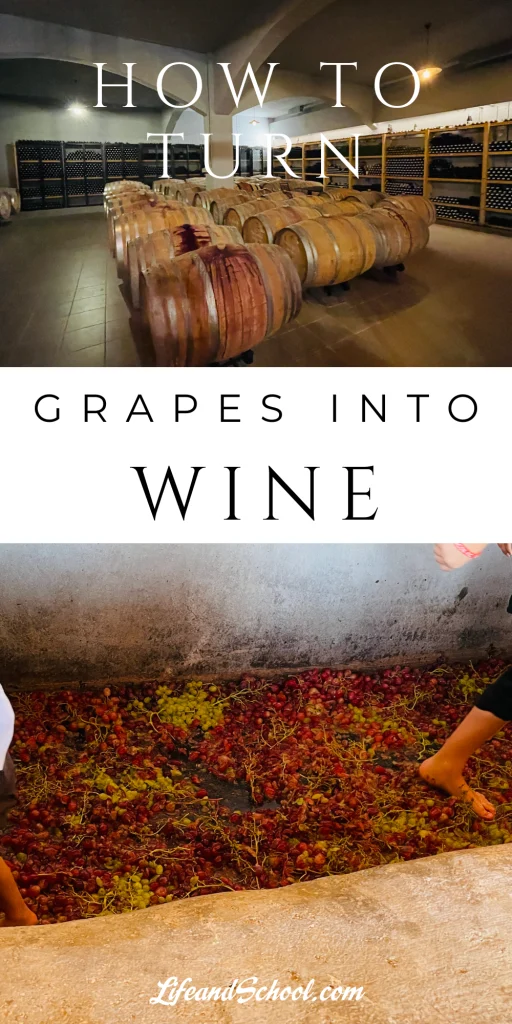
Here is how children do crushing in Crete.
I remember doing it with my family when I was a child. Unforgettable.
Step 3: Fermentation
And that’s how primary fermentation goes: yeast which is naturally occurring on the grape skins converts the grape sugar into alcohol. For red wine, the skins, seeds, and juice ferment together; for white wine, skins are typically removed after crushing.
You can control the fermentation with the right temperature.Too cold, and fermentation slows; too warm, and you risk losing delicate aromas or creating off-flavors. Also fermentation can be a dangerous process if not done right. There are plenty of videos on YouTube showing the exploding fermentation process.
The primary fermentation can last from a few days to a couple of weeks.
Step 4: Pressing (For Red Wine)
After the primary fermentation, the the grape skins and seeds are pressed to extract the remaining juice which is now rich with color, tannins, and flavor.
Step 5: Aging
After the primary fermentation, you should choose your vessel where your wine will further ferment. Best to choose are oak barrels, because they give more flavour to your wine. But also stainless steel, or glass can be used, each imparting different characteristics.
Wine like us humans ages differently – some age for months to years, others sorts less.
Step 6: Maturation in the Bottle
Well, if you get to this step, all you need is just a little bit more patience. Some wines benefit from bottle aging to develop complexity, though many are meant to be enjoyed young.
So, good things come to those who wait, but not those, who wait too late.
Cheers and make your own amazing experiences! You could try also gardening.