
From May to September, when the chamomile flowers are near full bloom with their bright yellow centers, it’s our time for us again to pick, dry, and store chamomile for tea. The name chamomile comes from the Greek “chamai” which means on the ground, and mela which means apple. Indeed, the mild aroma reminds me of an apple-like scent. But I like it, not only because of its aroma, but because of its health benefits for the whole family.
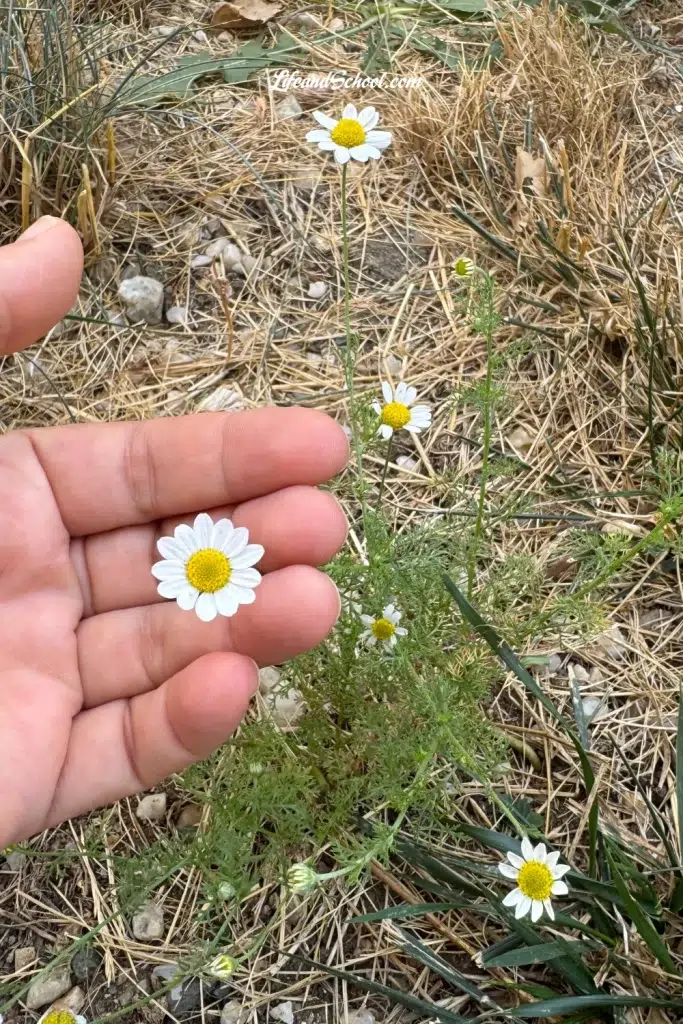
Chamomile is one of the essential medicinal plants that everyone of us should have at home, because of its versatile uses and benefits, we shared in our previous post. So, if you decide to collect your own chamomile for tea, this is how we do it!
How to Harvest Chamomile and Pick Chamomile Flowers?
Chamomile flowers are best harvested an hour or two before noon on a sunny day. The dew has dried, ideally when petals are fully open, and the essential oil content is at its peak. Picking the flowers one by one can be a bit tedious, but it’s manageable – especially if you’re only gathering a small bag for personal use.
Please pick only the flower heads and leave the roots undisturbed, so the plant can recover and bloom again. If you pull up the roots, the plant will die.
My grandma used to harvest large amounts of chamomile because she used it for everything- hot and cold teas, herbal pouches, tinctures, and creams. She even had a rustic chamomile harvester, the kind I believe you can still find online or even DIY if you’re feeling crafty.

Once you collected the amount of chamomile flower heads you need, wash them gently in a big bowl to remove dirt or insects, and then pat dry.
How to Dry Chamomile
Drying your own chamomile is simple. Simply choose the herb drying method that suits you. Our guide “How to Dry Herbs At Home The Right Way” can help!
For chamomile, the best method would be shade drying, but you can also try sun drying and oven drying as well.
Shade Drying
Why I Always Choose Shade Drying for My Herbs
I always choose shade drying because, even though it takes longer than other methods, it preserves the herb’s beneficial compounds in the most gentle and natural way. For delicate herbs like chamomile, this method helps retain their aroma, essential oils, and therapeutic properties far better than sun or oven drying.
How to Shade Dry Chamomile (Two Easy Methods)
1. Hang in Bunches
Gather your washed chamomile flowers into small bunches and tie them with natural hemp twine. Hang them upside down in a well-ventilated, shaded space – like your balcony. Leave them to dry for 1–2 weeks, depending on humidity and weather.
2. Dry Flat on Paper or Cloth
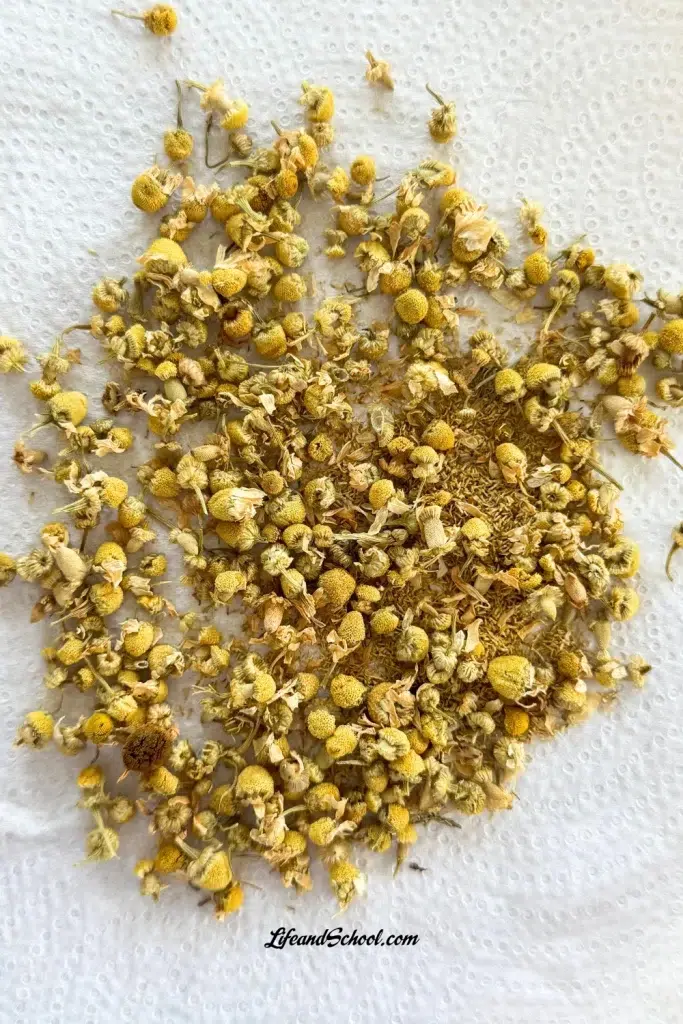
Alternatively, you can spread the washed flower heads in a single layer on a clean kitchen paper sheet or cotton cloth. Place them in a dry, shaded, and well-ventilated area. Turn them occasionally to ensure even drying. This method also takes about 1–2 weeks.
Sun Drying Herbs: Why You Should Avoid It
While sun drying may seem like the most natural way to preserve herbs, it actually causes significant degradation in both color and aroma. Exposure to direct sunlight can damage the delicate compounds that give herbs their medicinal and aromatic qualities.
For example, in the case of Roman chamomile, studies have shown that sun-dried samples had much lower levels of key volatile components – such as isobutyl isobutyrate, 3-methylbutyl isobutyrate, and propyl tiglate – compared to herbs dried in a hot-air oven at just 40 °C. These are some of the very compounds responsible for the herb’s soothing fragrance and therapeutic effects!
So, while sun drying might work for some herbs, I recommend avoiding it if you’re trying to preserve the delicate essential oils and beneficial compounds in more sensitive herbs like Roman chamomile. Instead, go for shade drying or low-temperature oven drying to maintain both quality and potency.
Oven Dry
For faster drying, place the flower heads on a baking sheet at 90–100°F (32–38°C) in an oven with the door slightly open. Check every 30 minutes (takes 1–2 hours). Oven drying is not the best and not the worst method of drying camomile, but for sure the fastest.
Store
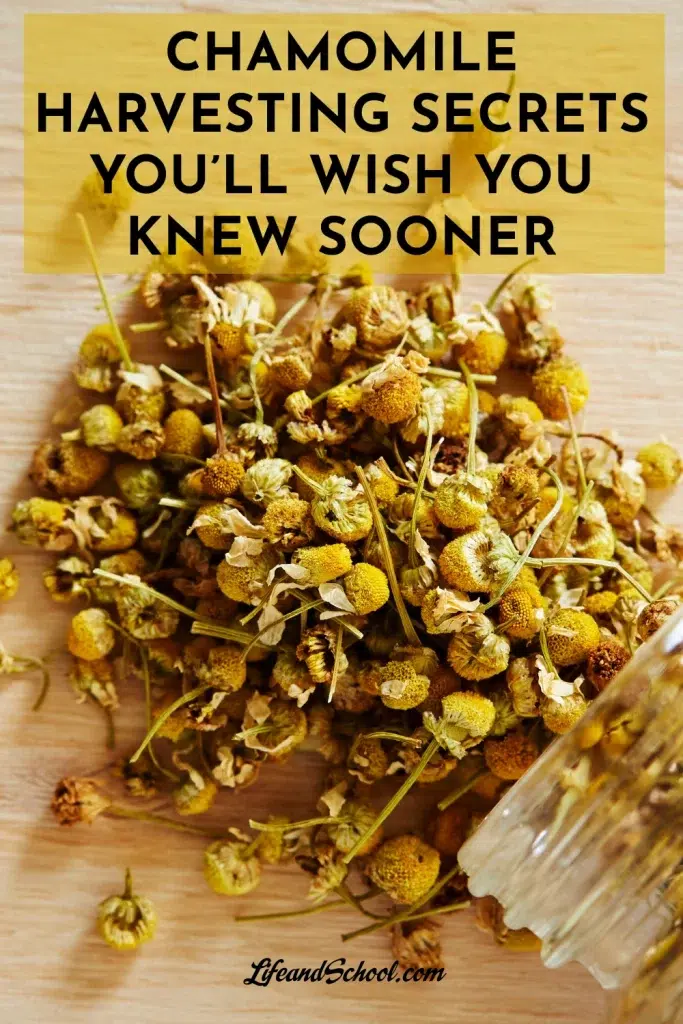
Once fully dry (crisp to the touch), store in an airtight container in a cool, dark place. I usually store my chamomile in a paper bag or a glass jar.
How to Make a Chamomile Iced Tea for Summer
Infusion is the simplest way to prepare the flowers of the chamomile, preserving its delicate flavors and compounds. You can use it as a herbal medicine or just as a refreshing and relaxing drink.
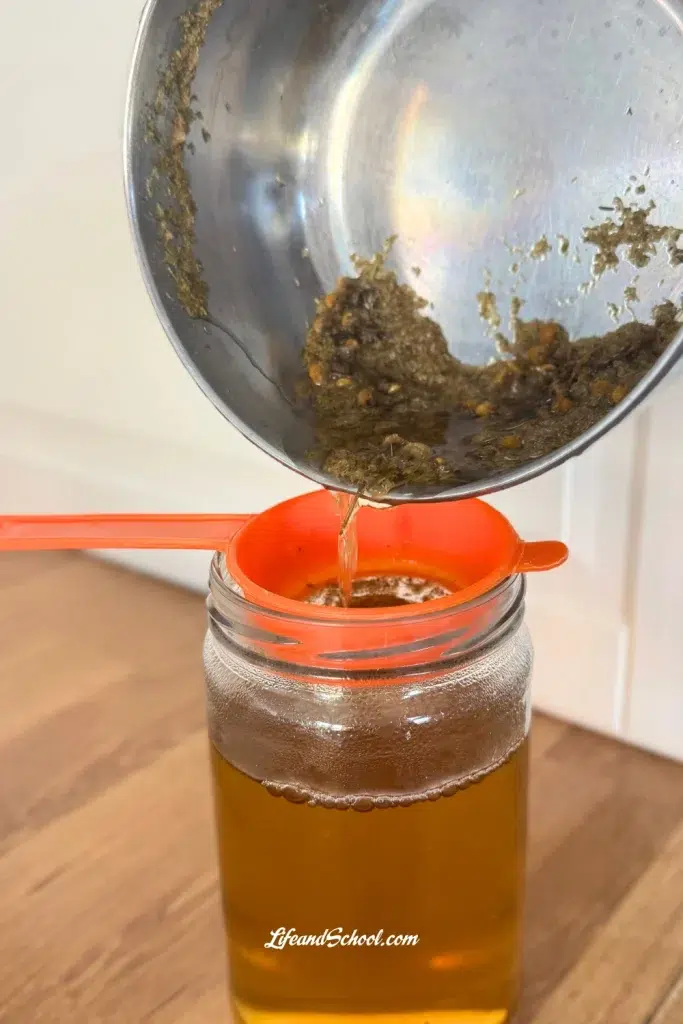
Here is our simple recipe for a chamomile iced tea that you would love in the summer.
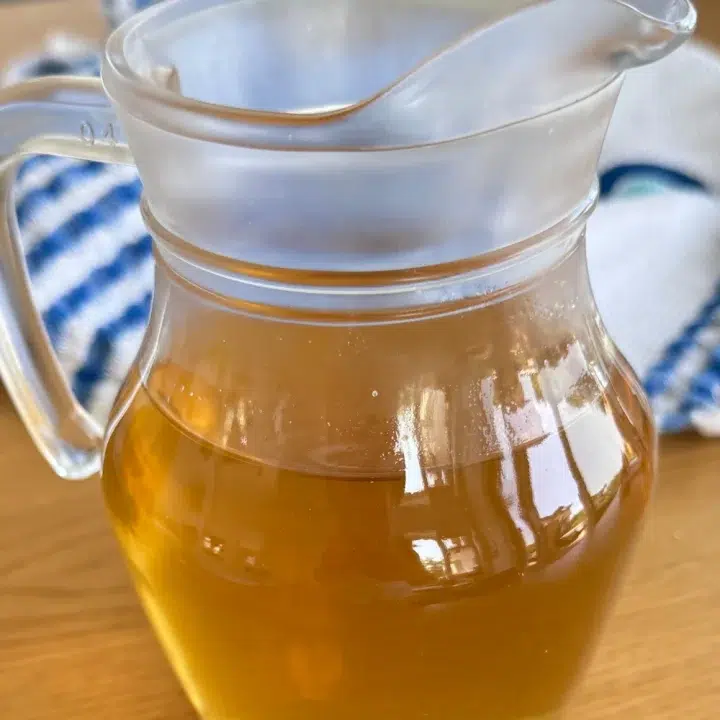
Chamomile Tea (Iced Tea for the Summer)
Chamomile Tea (Iced Tea for the Summer)
Ingredients
- 2 tbsp dried chamomile flowers or 4 tbsp fresh chamomile flowers
- 750 ml (3 cups) water
- Optional:
- 1-2 Fresh mint leaves or 1 scented geranium leaf, or 1-2 tbsp honey for flavor
Instructions
1. Boil the water first.
2. Add the herbs to the boiling water for 30 seconds, then turn off the heat. Cover with a lid and let them infuse for 10–15 minutes. Add optional ingredients like mint or scented leaf geranium.
3. Strain out the flowers using a fine mesh sieve.
4. Add optional ingredients like honey.
5. Let it cool down, put it in a glass jar with a lid and place it in the fridge for 3-4 hours.
6. Serve over ice and garnish with a chamomile flower.
Precautions
Allergies
Chamomile may cause allergic reactions in people sensitive to ragweed, daisies, or other Asteraceae plants.
Medications
Chamomile can interact with blood thinners or sedatives. Consult a doctor if you’re on medication.
Pregnancy
High doses may not be safe during pregnancy; check with a healthcare provider.
Key Actions
Chamomile is anti-inflammatory, antiallergenic, antispasmodic, relaxant and carminative.
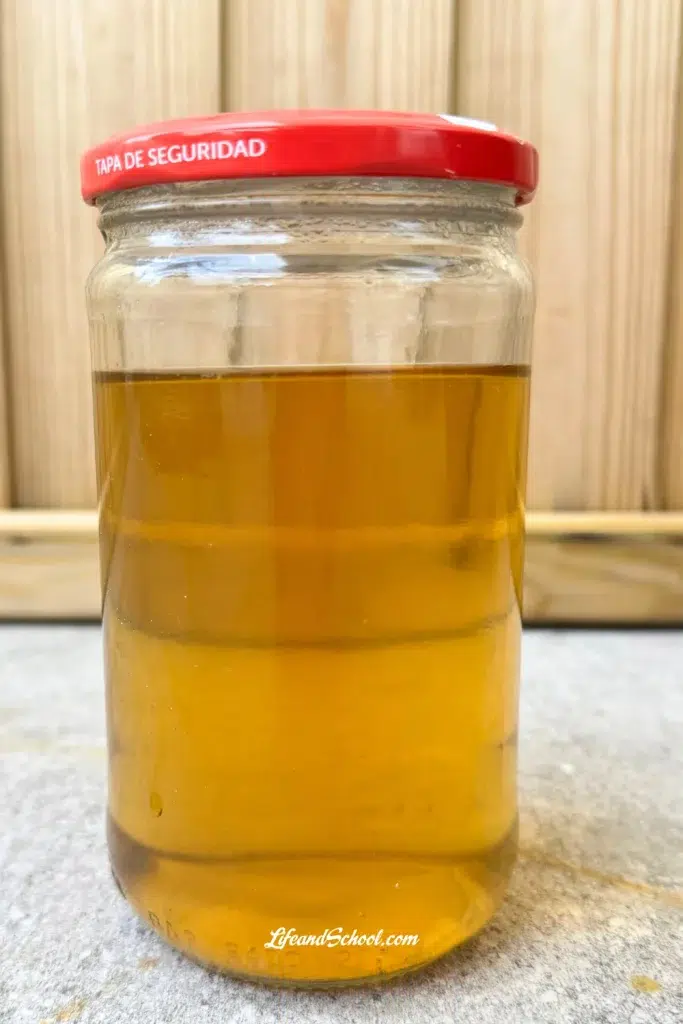
Traditionally, chamomile tea is used for
- digestive problems
- for relaxation and as a natural sleep remedy
- Interestingly, it’s useful for hay fever and asthma.
If you have flu symptoms, on a steam distillation, chamomile produces chamazulenes which is antiallergenic.
Chamomile can be safely consumed up to 5-6 cups a day. Let me know, if you liked it! Cheers!