
Parsley (Petroselinum crispum) is one of the most common herbs that you can find throughout the world. We humans have been using this amazing herb for thousands of years. Simply because it’s easy to grow everywhere and works well with everything! You will find it in every single cuisine in the world. In fact, the Greeks even have a saying “just like parsley”, about things and even people – that appear everywhere without a significant role.
But it is so much more than just a common, boring kitchen herb – it’s an incredible green powerhouse for health.
Let’s dive in and learn some amazing facts about this parsley, its medicinal properties, health benefits and uses.
Parsley Origins
Parsley is native to the Mediterranean and, according to some sources, originated in Sardinia. It belongs to the family Apiaceae (Umbelliferae). It was was sacred to the ancient Greeks, used to crown athletic victors and decorate tombs.
So, it should come as no surprise that the word itself goes back to Ancient Greece. Parsley (Petersilie) is simply the Latinised form of the Greek word πετροσέλινον (petroselinon), which literally means “rock-celery,” combined from the two words πέτρα (petra), meaning “rock,” and σέλινον (selinon), meaning “celery.”
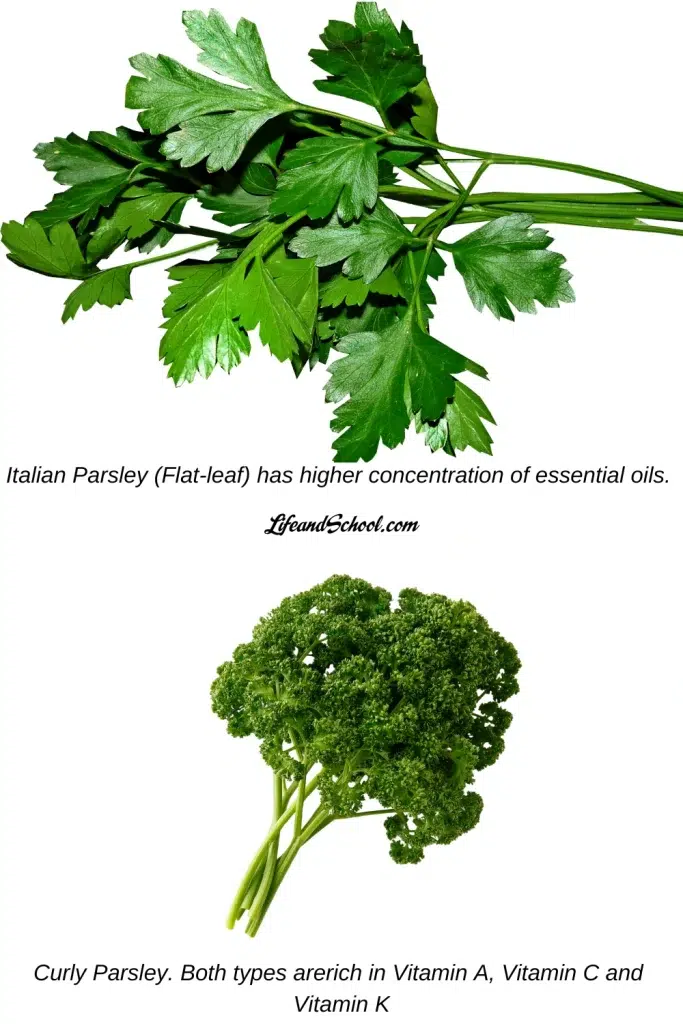
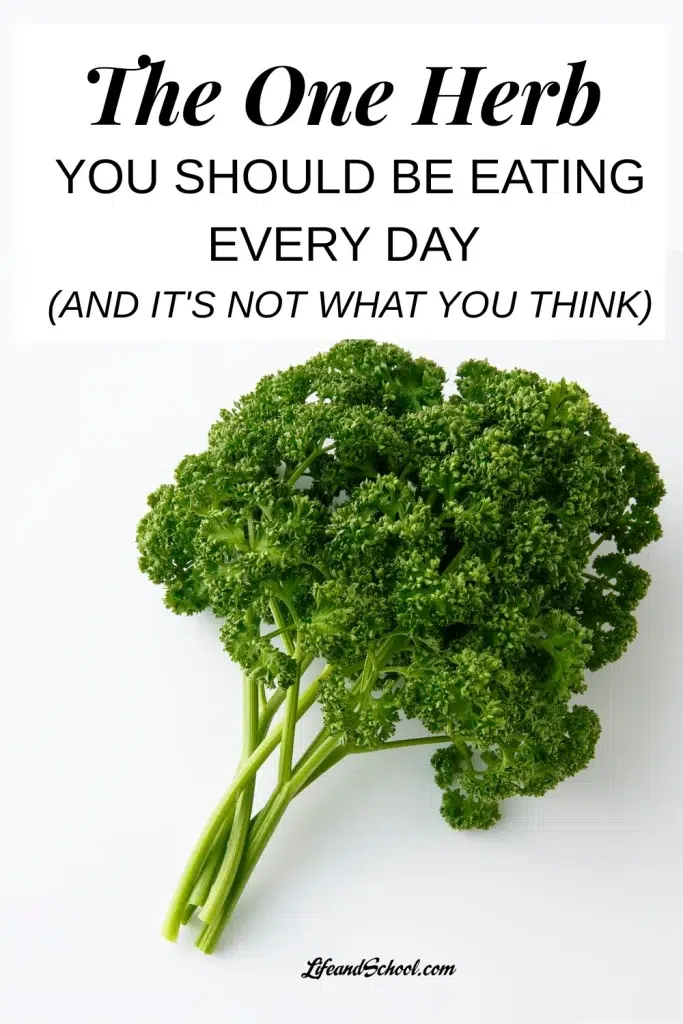
The two most common types of parsley are the curly-leaf (often used as a garnish for its frilly texture) and the flat-leaf parsley (also called Italian parsley, prized for its stronger flavor in cooking). The Italian one has a slightly higher essential oils than the curly-leaf one.
Medicinal Properties of Parsley
Parsley has been used for centuries in traditional medicine across cultures, from Ayurvedic remedies to European herbalism. So you might be surprised that parsley is not just a simple kitchen herb, but an important medicinal plant with a wide range of proven health benefits.
But what exactly makes parsley such a little green powerhouse?
Scientific studies have found that its power comes from active plant compounds. These include phenolic compounds and flavonoids – especially apigenin, apiin, and 6″-Acetylapiin. Parsley also contains essential oils like myristicin and apiol, as well as coumarins.
Parsley is a low-calorie, nutrient-dense and loaded with vitamins K, C, and A, plus minerals like iron, calcium, and potassium.
All these natural compounds work together to give parsley its impressive health effects, from fighting inflammation to protecting your body with antioxidants. Let’s now see the long list of medicinal health benefits of this little wonder herb!
Key Medicinal Properties of Parsley, Supported by Science
Parsley has a wide range of pharmacological activity such as:
Whole Body Protection
- Antioxidant – Protects your cells from damage caused by free radicals (like rust protection for your body).
- Cytoprotective – Shields your body’s cells from harm.
- Anti-inflammatory – Reduces inflammation, which can help with arthritis, skin issues, and chronic diseases.
- Chemoprotective – Blocks cancer-causing compounds and may reduce cancer risk.

Brain & Nervous System
- Brain protective (neuroprotective) – Supports memory, focus, and protects the brain from stress.
- Analgesic – Works as a natural pain reliever.
- Spasmolytic – Calms muscle spasms and cramps.
Heart & Circulation
- Anti-platelet – Helps prevent blood clots by keeping platelets from sticking together.
- Hypotensive – May help lower high blood pressure.
Digestive System
- Gastroprotective – Protects the stomach lining and supports digestion.
- Laxative – Supports healthy bowel movements and eases constipation.
Metabolism & Hormones
- Anti-diabetic – Helps regulate blood sugar levels.
- Estrogenic – Mimics estrogen in the body, supporting women’s hormonal balance.
Immune System
- Immunosuppressant – Helps balance an overactive immune system.
- Antibacterial – Fights harmful bacteria.
- Antifungal – Protects against fungal infections.
- Antimicrobial – Combats both bacteria and fungi, useful for skin and urinary health.
Liver & Kidneys
- Hepatoprotective – Supports liver health and detoxification.
- Nephroprotective – Protects the kidneys from damage.
- Diuretic – Helps the body flush out extra fluids, supporting kidney health and reducing bloating.
Scientific studies hightlight that traditional and folklore medicines use parsley as carminative, gastro tonic, diuretic, antiseptic of urinary tract, anti-urolithiasis, anti-dote and anti-inflammatory and for the treatment of amenorrhea, dysmenorrhea, gastrointestinal disorder, hypertension, cardiac disease, urinary disease, otitis, sniffle, diabetes and also various dermal diseases.
Parsley Nutritional Healthy Benefits
It’s actually pretty easy to eat parsley every day – and once you learn about its numerous impressive health benefits, you’ll want to add it to your meals for so much more than just garnish!
Here’s a breakdown of why you should eat parsley every day:
Rich in Nutrients
Parsley is a low-calorie, nutrient-dense herb loaded with vitamins K, C, and A, plus minerals like iron, calcium, and potassium. Just one tablespoon of fresh chopped parsley provides over 70% of the daily recommended intake of vitamin K, essential for blood clotting and bone health. Vitamin C and A act as antioxidants, supporting immune function and eye health.
Supports Bone Health
Vitamin K in parsley supports bone growth and mineral density, reducing fracture risk. A meta-analysis found that higher vitamin K intake was linked to a 22% lower fracture risk. Parsley also contains calcium and magnesium, which further strengthen bones.
Fun Fact: Ten sprigs of parsley provide enough vitamin K for your daily needs! So, what are you waiting for?!
Promotes Kidney Health
Parsley’s diuretic properties, driven by compounds like apiol and myristicin, help increase urine production, potentially preventing kidney stones by reducing calcium crystal formation.
You can also try parsley-infused water by steeping fresh leaves overnight to support kidney function.
Antioxidant Powerhouse
Parsley contains flavonoids like apigenin and myricetin, which combat free radicals and reduce oxidative stress. These antioxidants may lower the risk of chronic diseases like heart disease, diabetes, and cancer. Also, it simply makes your skin glow!
Dried parsley is particularly high in apigenin, a compound with potential anticancer properties.
Supports Heart Health
Parsley’s folate helps reduce homocysteine levels, a risk factor for heart disease. A large study linked high folate intake to a 38% lower risk of heart disease. Carotenoids like lutein and beta-carotene in parsley also support heart health by reducing inflammation and cholesterol levels.
Aids Digestion
Parsley’s essential oils stimulate digestive juices and enzymes, relieving bloating, gas, and constipation. Its fiber content promotes healthy digestion and may reduce the risk of intestinal diseases.
Boosts Immunity
Vitamin C, zinc, and apigenin strengthen the immune system by reducing inflammation and fighting bacteria like Staphylococcus aureus and Escherichia coli. Parsley’s antimicrobial properties may also help with urinary tract infections (UTIs).
Fresh Breath
Chewing fresh parsley can freshen breath by eliminating odor-causing germs, making it a natural remedy for garlic breath
Anti-Inflammatory and Anticancer Potential
Parsley’s volatile oils and flavonoids, like eugenol, have anti-inflammatory properties that may ease arthritis pain and swelling. Studies suggest apigenin and myricetin could inhibit cancer cell growth, particularly for skin, breast, and prostate cancers, though more human research is needed.
Add Parsley to Your Diet!
Eat it fresh for all these amazing benefits! Chop it into salads and meals. Here are some great ideas to add it for 7-day Clean Eating Plan by BeautyBites.org!
It’s easy to grow parsley on your balcony and in the garden, but more about that, next time!
Precautions and Side Effects
Parsley is safe in food amounts, but high doses (e.g., supplements or parsley oil) can cause issues. So avoid supplements and oil. Just eat it fresh and there is almost no chance to reach a overdose of it by chewing it fresh.
However, if you want supplements (which is really not recommended), here are some precautions and side effects, you should be aware of:
Pregnancy
Large amounts (supplements) may induce uterine contractions or increase birth defect risks. Stick to culinary use if pregnant or breastfeeding.
Kidney/Liver Risk
Excessive parsley (e.g., 200 grams or high-dose extracts) may harm kidneys or liver.
Drug Interactions
Parsley’s vitamin K can affect blood thinners like warfarin, so consult a doctor if on medication.
Always consult a healthcare professional before using parsley medicinally, especially in high doses or with existing health conditions.
Try adding it to your next meal and let us know in the comments how you use this versatile herb!